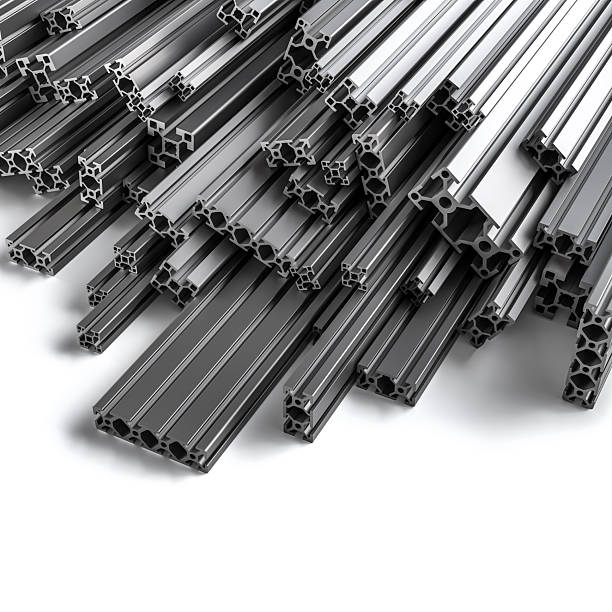
Straight profiles can look equally strong on a catalog page, yet their resistance to bending may differ sharply. Section moment of inertia shows how effectively a profile’s shape places material away from its center, where it best resists flexing. That value helps designers compare aluminum framing material before committing to a frame that must stay rigid, accurate, and safe.
It Determines How Much the Aluminum Profile Will Bend Under a Specific Load
Deflection depends on the applied weight, unsupported span, material stiffness, and profile geometry. Engineers use those figures to estimate how far a beam will sag before an aluminum framing kit is built.
Excessive movement may not break the rail, but it can still cause doors to drag, sensors to shift, or work surfaces to feel unstable. Selecting MiniTec extruded aluminum framing with enough bending resistance keeps the structure within an acceptable movement range during years of regular use.
Higher Values Allow for Longer Spans Without Requiring Mid-span Support
Long rails need greater resistance because bending increases rapidly as the distance between supports grows. Profiles with a higher moment of inertia can cross wider openings while carrying the same load with less sag. This advantage may remove a center post that would block access, product flow, or equipment clearance.
However, connections at both ends must still transfer the load safely into the T slot extrusion frame. Strong beams cannot perform correctly if brackets, fasteners, or supporting posts allow the ends to shift.
It Prevents Structural Twisting and Torsional Warping When Handling Off-center Weight
Off-center loads can make a frame twist instead of bending straight downward. Monitor arms, side-mounted cabinets, doors, and cantilevered fixtures often create this uneven force. Profile geometry, joint stiffness, and bracing influence how well an extruded aluminum T slot assembly resists rotation.
Adding cross members or moving heavy components closer to the centerline reduces torsional stress. Designers may also strengthen the loaded side of the frame so repeated one-sided forces do not pull the assembly out of square.
It Guides the Selection of the Lightest Possible Profile That Still Meets Safety Standards
Oversized rails add cost and weight without always improving the design. Moment-of-inertia data lets engineers compare profiles and choose the lightest section that stays within the allowed deflection. Such planning can make carts easier to move and reduce material use across repeated builds.
Smaller members may serve as panel supports, while larger MiniTec Aluminum Framing profiles carry machine loads or long spans. Matching each rail to its actual duty creates a more efficient structure than using one heavy size everywhere.
It Dictates the Deflection Limits for Precise Applications like CNC Beds and 3D Printers
Precision equipment often fails functionally before a frame reaches its strength limit. Tiny movements can affect tool paths, camera alignment, layer height, probe readings, or part positioning. For CNC beds, 3D printers, and inspection fixtures, stiffness often matters more than maximum load alone.
Tighter limits require designers to calculate movement under both machine weight and operating forces. Properly selected T slot aluminum extrusion helps maintain geometry while motors, carriages, and tooling travel across the frame.
It Changes Based on the Orientation of the Beam, Affecting How the Frame Should Be Mounted
Rectangular profiles do not resist bending in every direction. Turning a deep section onto its narrow side can reduce stiffness even though its size and weight remain unchanged. Section-property tables usually list separate values for each principal axis to show that difference.
Correct orientation may solve a deflection problem without requiring a larger profile. Mounting the deeper dimension in the load direction lets the aluminum framing material use its shape more effectively.
It Ensures the Framing Can Withstand Dynamic Movements, Vibrations, and Sudden Impacts
Moving equipment produces forces that static weight estimates may miss. Conveyors, actuators, drawers, robotic devices, and rolling carts create acceleration, stopping loads, vibration, and occasional impact. Repeated motion can loosen weak joints or cause a flexible frame to shake.
Greater stiffness limits movement, but connectors, anchors, and braces must also support dynamic demands. Testing or engineering review may be needed for high-cycle machinery and frames near heavy industrial traffic.
It Helps Calculate the Exact Factor of Safety Required for Load-bearing Structures
Safety factors provide a margin between expected service conditions and allowable capacity. Designers use calculated stress, deflection, connection ratings, and possible overloads to set that margin. Moment of inertia supports the deflection review, while material strength and joint capacity address failure risk. Final selection should consider the complete assembly rather than one profile alone. MiniTec Solutions offers MiniTec Aluminum Framing, compatible hardware, and profile options that help manufacturers compare stiffness, orientation, span, and load requirements before specifying a modular structure.
