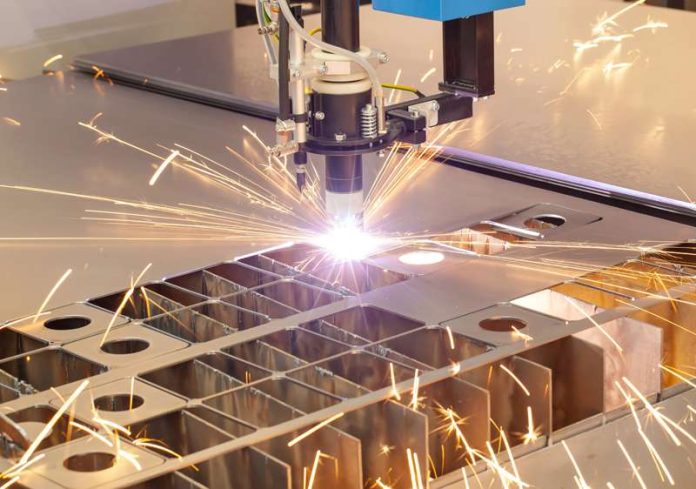
Precision metalwork rewards shops that can cut faster, cleaner, and with fewer surprises on the floor. A CNC plasma cutter gives manufacturers a practical way to turn digital designs into accurate metal parts while keeping labor, waste, and rework under better control.
Higher Material Throughput Across Medium and Thick Plate Production
Speed becomes a serious advantage when production schedules involve plate steel, aluminum, or stainless components. A plasma cutter uses a concentrated arc and gas flow to slice conductive metal quickly, which helps crews move more material through the shop without slowing every job around sawing, drilling, or manual torch work. Manufacturers often invest in a CNC plasma cutting machine because it can maintain steady travel rates across long cuts and repeated patterns. That steady motion matters on brackets, frames, base plates, and structural parts where slow cutting can pile up delays before welding, machining, or assembly even begins.
Reduced Secondary Finishing After Thermal Cutting Operations
Clean cuts save more than a few minutes at the grinder. A well-set CNC plasma cutter can reduce heavy slag, uneven edges, and rough profiles that usually require extra hand finishing before a part reaches the next station. Skilled operators still check consumables, amperage, gas settings, and plate condition because those details shape edge quality. Better setup means fewer burrs, less cleanup, and smoother workflow for teams that need parts ready for welding, fit-up, coating, or final inspection.
Consistent Kerf Geometry Across High Volume Production Runs
Kerf width may look minor, but it can quietly decide whether parts fit or fail. CNC programming can account for the material removed by the cutting arc, allowing finished dimensions to stay closer to the digital file instead of drifting from part to part.
Repeat work benefits most from this control. Once the machine, torch height, speed, and consumables match the material, the CNC plasma cutter can reproduce the same cut profile across a batch, giving manufacturers better consistency than hand-guided cutting can usually deliver.
Faster Nesting Efficiency Improves Raw Material Utilization
Nesting software helps shops place multiple parts across a sheet with smarter spacing and fewer wasted zones. A CNC plasma cutting machine can follow that layout accurately, which lets manufacturers get more value from each plate before scrap bins start filling up.
Material savings often grow on mixed-part jobs where brackets, tabs, gussets, and panels share the same sheet. Instead of cutting one shape at a time with guesswork, the system arranges parts with planned lead-ins, pierce points, and clearances that protect quality while improving yield.
Broad Conductive Metal Compatibility in One Cutting Platform
Flexibility gives fabrication teams more room to accept different jobs without changing their entire process. A CNC plasma cutter can cut many conductive metals, including mild steel, stainless steel, aluminum, brass, and copper, depending on the machine setup and material thickness.
Versatile cutting capacity matters for manufacturers serving several industries or building custom assemblies. A CNC machine company that understands metal behavior can help match equipment, consumables, and cutting parameters to the parts a shop actually produces rather than forcing one generic setup onto every material.
Lower Production Bottlenecks Through Automated Sheet Processing
Bottlenecks often appear when one workstation depends too heavily on manual cutting. Automated sheet processing helps move cutting tasks into a repeatable system, freeing skilled workers to focus on layout checks, programming, welding prep, or quality control.
Production managers searching for CNC companies near me usually want more than a machine purchase. They need a setup that reduces stop-and-start handling, improves scheduling, and keeps downstream teams supplied with accurate parts before delays spread across the floor.
Repeatable Cut Quality Across Complex Part Geometries
Complex profiles can expose the limits of hand cutting fast. Tight corners, slots, circles, interior cutouts, and curved contours all demand smooth torch motion, stable speed, and correct entry points to keep the final part useful.
CNC control gives the plasma cutter a major advantage on these shapes because the programmed path does not get tired, rushed, or distracted. That repeatable motion helps manufacturers produce cleaner geometry for assemblies where holes must align, tabs must seat properly, and edges must match the drawing.
Digital CNC Integration Supports Scalable Manufacturing Workflows
Digital integration helps manufacturers connect design, programming, cutting, and inspection into a more organized workflow. CAD files can become machine-ready toolpaths, and operators can refine cut settings as jobs repeat, making future runs easier to quote, schedule, and produce. Amtec Solutions Group supports this kind of accuracy-focused production through automated robotics manufacturing and precision machining experience. For manufacturers comparing a CNC plasma cutter, reviewing a CNC plasma cutting machine, or looking for a dependable CNC machine company, the company offers helpful insight into cutting performance, automation needs, and scalable fabrication results.
